RAPEX / EU Safety Gate: How Unsafe Products Are Flagged and What It Means for You

Written by: Manuel Mateos CEO and Regulatory Affairs Director, CMC Medical Devices & Drugs S.L.
The European Union operates one of the world’s most rigorous regulatory frameworks to protect consumers and patients from non-compliant or dangerous products. At the core of Europe’s rapid response strategy against non-food dangerous goods is the RAPEX system, officially rebranded as the EU Safety Gate.
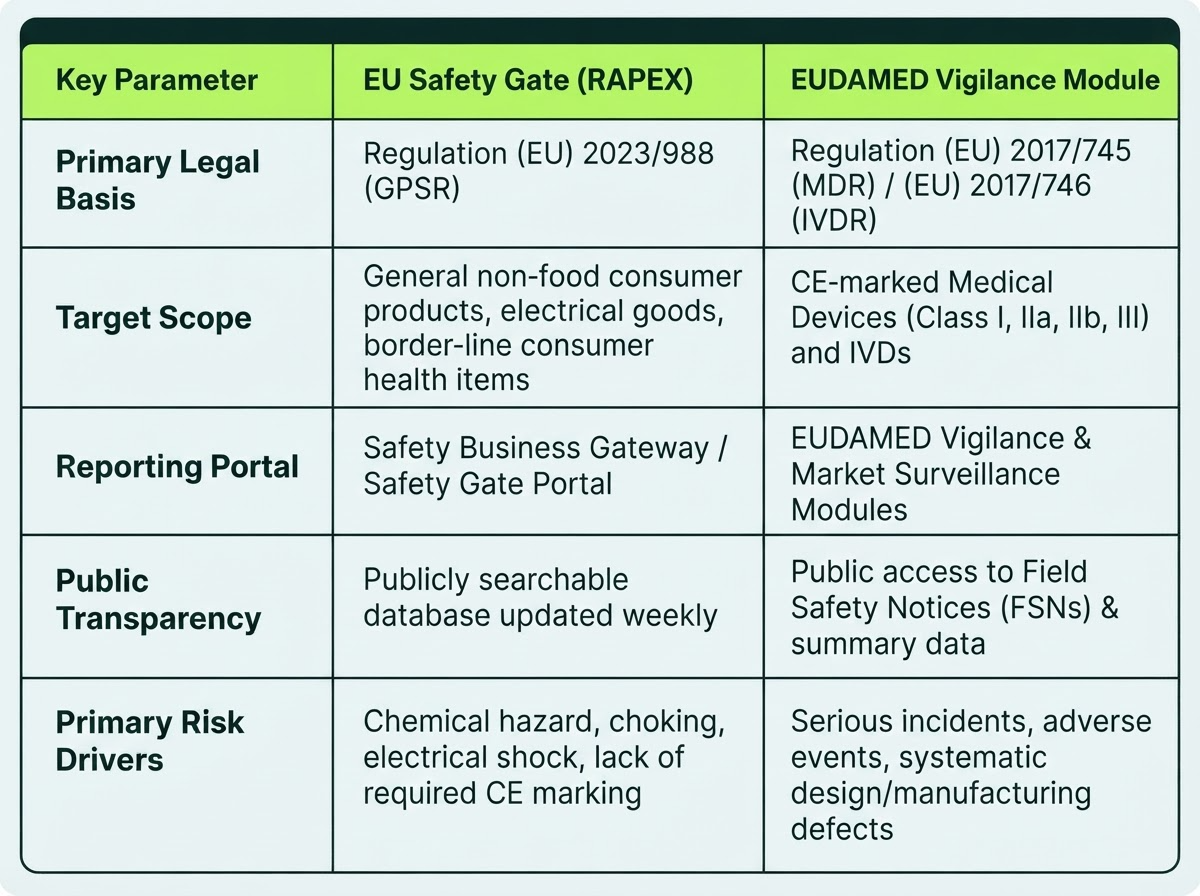
While medical device manufacturers primarily focus on device-specific post-market surveillance (PMS) under Regulation (EU) 2017/745 (MDR) and Regulation (EU) 2017/746 (IVDR), the safety gate rapex alert mechanism plays a critical, overlapping role in European market surveillance. Understanding how this system functions—and where dedicated medical device vigilance ends and general product safety alerts begin—is essential for any MedTech economic operator placing goods on the EU market.
What Is the RAPEX System / EU Safety Gate?
Established under the former General Product Safety Directive (2001/95/EC) and upgraded under Regulation (EU) 2023/988 (GPSR), the Rapid Exchange of Information System (RAPEX) is the EU’s rapid alert tool for non-food dangerous products. Now publicly operating as the EU Safety Gate, this system enables 30 participating countries (the 27 EU Member States plus Norway, Iceland, and Liechtenstein) and the European Commission to share information quickly regarding products that pose a risk to the health and safety of consumers.
When a national Market Surveillance Authority (MSA)—such as the AEMPS in Spain, ANSM in France, or BfArM in Germany—identifies a product presenting a serious risk, it logs an alert in the rapex system. This notification details the product identifier, country of origin, specific hazards identified, and the measures taken (such as customs seizure, sales bans, or public consumer recalls).
RAPEX vs. EUDAMED: Clarifying Market Surveillance Boundaries
A common point of confusion among MedTech regulatory affairs teams is determining whether an incident or product defect must be reported through EU Safety Gate or through dedicated medical device vigilance channels.
CE-Marked Medical Devices Under MDR/IVDR
Medical devices intended strictly for professional healthcare environments or CE-marked under MDR (EU) 2017/745 or IVDR (EU) 2017/746 fall directly under the mandatory vigilance and post-market surveillance requirements of the medical device regulations. Incident reports, Field Safety Corrective Actions (FSCAs), and Field Safety Notices (FSNs) are submitted directly to competent authorities via EUDAMED (or national portals during transition periods).
For guidance on managing MDR vigilance obligations, consult our analysis on MDCG 2023-3 Rev.2 vigilance rules.
Dual-Use, Consumer Healthcare and Borderline Products
Where the safety gate rapex network frequently intersects with the medical sector is in borderline categories:
- Over-the-Counter (OTC) Consumer Equipment: Wearable wellness monitors, electronic muscle stimulators, mass-market pulse oximeters, and cosmetic aesthetic devices without valid medical CE certification.
- Non-Compliant Personal Protective Equipment (PPE): Filtering facepieces (FFP2/FFP3 masks) or protective gloves intended for general consumer protection rather than clinical use.
- Counterfeit or Illicit Devices: Fraudulent products entering the EU supply chain bearing fake CE certificates or unauthorized Notified Body numbers.
If a product marketed to consumers is found to present serious risks—or claims medical intended purposes without fulfilling MDR requirements—national MSAs utilize the EU safety gate to notify border customs and enforcement agencies across all member states to intercept the inventory immediately.
The Impact of the General Product Safety Regulation (GPSR EU 2023/988)
Applied directly across the EU since 13 December 2024, Regulation (EU) 2023/988 (GPSR) modernizes product safety requirements and significantly enhances the powers of the rapex system.
Key implications for MedTech and consumer health manufacturers include:
- Safety Business Gateway Mandate: Manufacturers and economic operators must notify authorities via the Safety Business Gateway as soon as they become aware of a safety incident or dangerous product on the consumer market.
- EU Authorized Representative Requirements: Any product placed on the EU consumer market—including self-care and health monitoring products—must have a designated Economic Operator (Manufacturer, Importer, or Authorized Representative) located within the European Union.
- Enhanced Recalls and Standardization: Direct notification of consumers regarding safety recalls is now required. Voluntary recalls must offer consumers a free repair, replacement, or full refund.
What Happens When a Product Is Flagged on Safety Gate?
When a product is published on the public safety gate rapex dashboard, the immediate consequences for the manufacturer, importer, and distributor are severe:
- Customs Impoundment: EU customs authorities automatically flag the EAN, brand name, and manufacturer ID. Shipments entering any EU port of entry are held for inspection or returned to origin.
- Cross-Border Enforcement: Market Surveillance Authorities in all 27 EU member states receive the notification and issue administrative orders to remove the item from physical retail shelves and e-commerce platforms.
- Reputational Damage: Safety Gate listings are public, indexing on major search engines and alerting healthcare procurement departments, distributors, and end consumers to compliance failures.
- Mandatory Reporting to Notified Body: If the entity involved manufactures CE-marked devices under ISO 13485 quality systems, any RAPEX flag triggers an immediate audit review by their Notified Body.
4 Actionable Steps to Prevent RAPEX Flags and Protect Market Access
To maintain compliance and avoid market surveillance enforcement actions, economic operators should integrate robust oversight into their Quality Management System (QMS):
- Maintain Precise Qualification and Classification
Ensure clear distinction between consumer wellness products (governed by GPSR) and medical devices (governed by MDR/IVDR). Claiming a medical intended purpose without completing a conformity assessment under MDR Article 52 will lead to an immediate market ban and RAPEX safety flag. - Establish Closed-Loop Post-Market Surveillance (PMS)
Implement robust PMS procedures in line with ISO 14971 risk management standards. Early detection of trending complaints allows manufacturers to execute proactive voluntary corrective actions before a national authority initiates an involuntary public recall. Review our comprehensive guide on Post-Market Surveillance (PMS) for compliance and innovation for step-by-step PMS integration. - Verify Supply Chain and Economic Operator Responsibilities
Under MDR Articles 13 & 14 and GPSR Article 14, importers and distributors must verify that technical documentation, Declaration of Conformity (DoC), labeling, and instructions for use (IFU) comply with EU requirements before making products available on the market. - Audit E-Commerce and Digital Marketplace Listings
With online sales subject to strict surveillance under GPSR, manufacturers must audit third-party sellers to prevent non-compliant, unauthorized, or re-packaged versions of their devices from reaching consumers via online marketplaces.
Need Expert Support to Secure Your EU Market Access?
Navigating the complexities of EU market surveillance, the new GPSR requirements and MDR/IVDR vigilance can be a daunting task. A single compliance gap or misclassification can lead to a RAPEX alert, crippling your supply chain and damaging your brand’s reputation. Don’t wait for a customs seizure or a public regulatory flag to take action. Whether you need a strategic regulatory gap analysis, a reliable EU Authorized Representative (EC REP), or a comprehensive audit of your Post-Market Surveillance (PMS) system, our team of regulatory experts is ready to guide you.
Contact CMC Medical Devices today to ensure your product portfolio remains compliant, safe, and seamlessly available on the European market.
Frequently Asked Questions (FAQ)
What is the main difference between RAPEX and Safety Gate?
RAPEX (Rapid Exchange of Information System) is the original legal name of the EU’s rapid alert system for non-food dangerous consumer products. “EU Safety Gate” is the updated public name and portal introduced to enhance transparency and streamline notifications under Regulation (EU) 2023/988 (GPSR).
Are professional-use medical devices reported on RAPEX?
No. Medical devices designed exclusively for professional healthcare environments are regulated under Regulation (EU) 2017/745 (MDR) and reported through EUDAMED vigilance channels. However, consumer health items, dual-use devices, non-certified wellness products, and counterfeit medical devices are regularly flagged on the eu safety gate.
Who can submit an alert to the Safety Gate system?
National Market Surveillance Authorities of EU/EEA member states submit formal notifications to the system. Economic operators (manufacturers, importers, authorized representatives) submit mandatory hazard and incident notifications to authorities using the Safety Business Gateway.
How does a RAPEX alert affect an EU Authorized Representative (EC REP)?
If an Economic Operator or Authorized Representative is listed on an unsafe product alert, they become legally liable to assist competent authorities in executing corrective actions, locating inventory, and ensuring product withdrawal across the European Single Market.